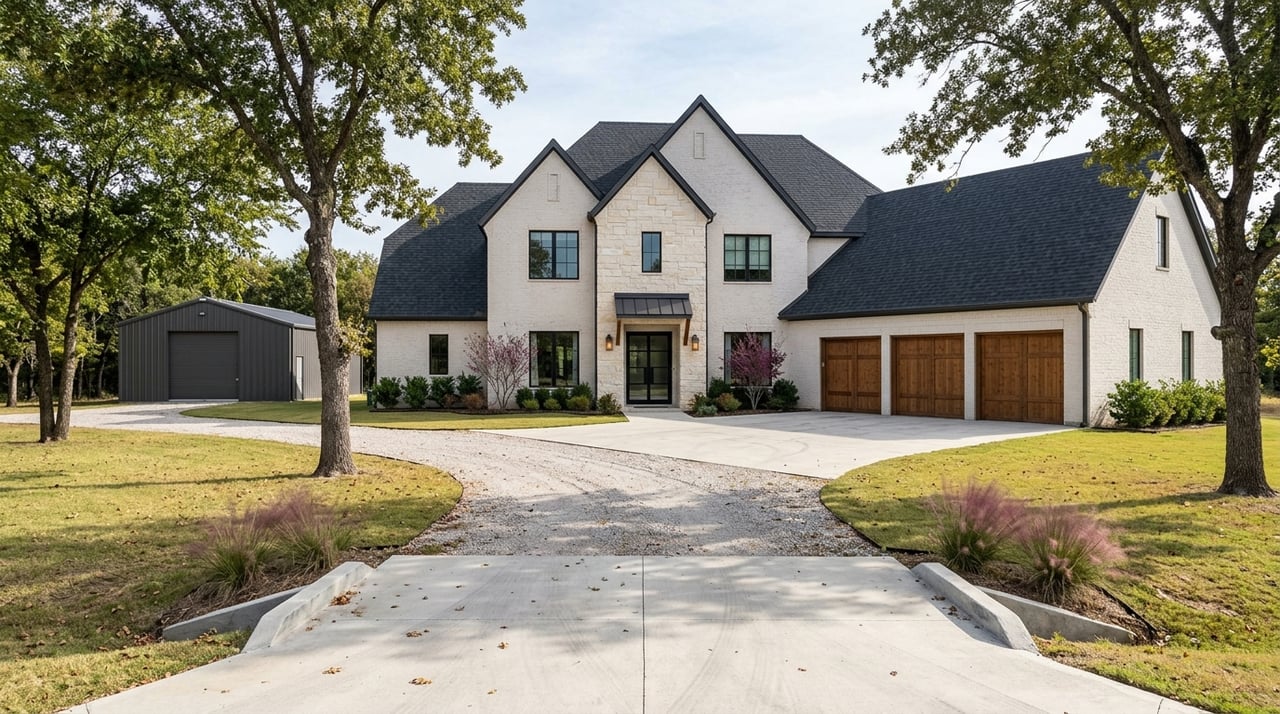
If you are dreaming about more space in Argyle, acreage can sound simple until you get into the details. A one-acre-plus property may offer room to spread out, but what you can actually do with that land depends on zoning, platting, utilities, access, and site conditions. If you want to buy with confidence, it helps to know the local rules before you fall in love with a tract. Let’s dive in.
Why Argyle acreage is different
In Argyle, acreage is not just about lot size. The Town’s Planning and Zoning division oversees zoning, platting, land use, and tree preservation, and the comprehensive plan applies in both the incorporated area and the ETJ.
That matters because two properties with similar acreage can function very differently. One may be ready for estate-style living with the utilities and approvals you need, while another may require additional steps before you can build, add improvements, or change the use.
What SF-1 zoning means
For many acreage buyers, the key zoning district is SF-1. Argyle describes SF-1 as detached single-family, low-density zoning with a minimum lot size of one acre and a minimum width of 150 feet.
The town also notes that rural street sections are allowed in SF-1, and those sections may have no sidewalks. SF-1 areas must have or provide for water service from Argyle Water Supply Corporation.
If you are shopping for an estate-style home site, SF-1 may line up with your goals. Still, zoning is only one piece of the puzzle, because a property’s plat status, utility setup, and development limits can affect what happens next.
Planned developments can change the rules
Some Argyle acreage neighborhoods operate more like custom-planned communities than open rural land. The town identifies Planned Developments as custom districts and gives examples such as Waterbrook, Lakes of Argyle, Argyle Landing, and 5T Ranch.
That means you should not assume every acreage property follows the same standards as base zoning. A tract in a Planned Development may have its own development framework, so buyers should confirm exactly what applies to the property they are considering.
Can you keep animals on acreage?
Many buyers assume acreage automatically allows animals, barns, or stable use. In Argyle’s SF-1 district, that is not automatic.
The ordinance says a private animal lot and a stable or barn require a Specific Use Permit, often called an SUP. The ordinance also states that these uses need at least 1.5 acres of lot area, allow no more than one animal per acre of grazing land, and must meet setback requirements for stables, corrals, manure, feed, and bedding.
If animals are part of your plan, this is a key issue to verify early. It is much better to confirm what is allowed before closing than to assume the land will support your intended use.
Rezoning and SUP requests take time
If you want to use the property in a way that is not already allowed, the town’s FAQ says a rezoning request or Specific Use Permit requires public hearings and final council approval. That adds time, uncertainty, and process to your purchase.
For buyers, this means future plans should be part of your due diligence, not an afterthought. If your vision includes animals, additional structures, or another land use not clearly allowed today, you will want to know what approvals may be required.
Evaluate more than the house
When you buy acreage, you are not just buying a home. You are also buying the condition of the land and the upkeep that comes with it.
In practice, buyers should look closely at fencing, barns or sheds, pasture condition, drainage, and the general layout of the tract. These factors can affect day-to-day use, future improvements, and maintenance costs.
Town code also highlights common property maintenance issues acreage owners may face. These include grass and weeds over 12 inches, trash or rubbish accumulation, junked vehicles, parking on grass, and poor fence condition.
Utilities are parcel-specific
One of the biggest mistakes acreage buyers make is assuming utility service will be straightforward. In Argyle, utility availability can vary from one parcel to another, so every tract needs its own review.
The town lists Argyle Water Supply Corporation as the water provider. It also lists CoServ, TXU Electric, Atmos Gas, Frontier FiOS internet and TV, and Republic Services or Allied Waste for trash and recycling.
For wastewater, the town says charges are based on water usage and are collected by Argyle Water Supply Corporation. Even so, you should confirm whether the property is connected to sewer service or relies on an on-site system.
Septic systems need extra attention
If a property is outside town service or not on sewer, Denton County’s Environmental Health Division administers on-site sewage facilities in the unincorporated county. That makes septic review an important step in your due diligence.
The county’s septic guidance says homeowners should establish a regular tank-cleaning schedule, commonly every two to three years, and use only TCEQ-registered haulers. If you are buying a property with an existing septic system, ask about its age, maintenance history, and location.
For a vacant tract or future build, you will also want to understand how the septic setup fits with the site plan. Placement can affect where you put a home, driveway, barn, pool, or other improvements.
Private wells bring ongoing responsibility
Some acreage properties may have a private well. If so, the Texas Commission on Environmental Quality says the owner is responsible for regularly testing the water.
That is a simple point, but an important one. A private well can change your upkeep needs, so buyers should confirm how the well serves the property and what records are available.
Driveway and road access can affect buildability
Access is easy to overlook when you are focused on the home or land itself. On acreage, however, the ability to enter the property safely and legally can shape the entire project.
Denton County’s development-permit application requires the owner or authorized agent to apply, include a site plan showing proposed and existing improvements and any existing septic system, and provide the property description. The county’s culvert and drive permit process also requires site staking, county review, and inspections before development permits are issued.
If the tract borders a state highway, TxDOT says access driveway permits are issued to owners of property abutting state highways, although permitting may be transferred to municipalities or eligible counties under state rules. In plain terms, access is not always a quick box to check.
Platting matters more than many buyers expect
Platting is one of the most important issues in an Argyle acreage purchase. The town defines a plat as the map that becomes the legal lot of record after approval and filing.
Argyle says platting is required for any division into two or more parcels or for development on previously unplatted contiguous parcels. The town also states that a building permit cannot be issued unless the property is platted or otherwise a legal lot of record.
This can be a major issue for buyers who want to build, improve, or potentially divide land in the future. If the property is not already in the right status, your timeline may be longer than expected.
When a preliminary plat is required
The town says a preliminary plat is required for all unplatted tracts larger than ten acres or for tracts involving streets, drainage ways, or utilities. The plat generally must be signed and sealed by a Texas registered surveyor.
Argyle also says that once a plat application is complete, it must be acted on within 30 days. Approved plats must be filed within two years or they must be re-approved.
These are not small details. They can affect both timing and cost, especially if you are buying land with plans to build soon.
Check floodplain status early
Floodplain review should happen near the start of your due diligence, not at the end. Denton County regulates development in flood hazard areas and provides floodplain map tools for buyers and owners.
This matters because acreage often includes drainage swales, low areas, culverts, and room for future structures. If part of the tract sits in a flood hazard area, it may affect where you place a driveway, barn, addition, or other improvements.
A smart due diligence checklist
Before you close on acreage in Argyle, confirm the basics in the right order. That can help you avoid surprises and keep your plans realistic.
Here is a practical checklist based on local requirements:
- Confirm the current zoning district
- Verify whether the property is in a Planned Development
- Check plat status and legal lot of record status
- Confirm water service availability
- Determine whether the property is on sewer or septic
- Review well information if a private well exists
- Verify driveway, culvert, and road access requirements
- Check floodplain status early
- Confirm whether any Specific Use Permit or zoning change would be needed for your intended use
Why local guidance matters
Acreage purchases often look simple online, but the real story is in the details. What can be built, when it can be built, and how the land can be used may depend on town rules, county permits, utility access, and the property’s legal status.
That is why a land-savvy real estate team can make a real difference. When you have experienced guidance, you can line up the right questions early and avoid losing time on a tract that does not fit your goals.
If you are exploring acreage in Argyle and want clear guidance from a team that understands land, residential property, and the moving parts in between, start your search with Bauer Group.
FAQs
What should buyers verify before buying acreage in Argyle TX?
- Buyers should verify zoning, plat status, water source, sewer or septic setup, driveway and culvert access, floodplain status, and whether an SUP or zoning change is needed for the intended use.
Does one acre in Argyle TX automatically allow animals or a barn?
- No. In Argyle’s SF-1 district, a private animal lot and a stable or barn require a Specific Use Permit, and the ordinance includes minimum lot size, animal density, and setback requirements.
Why does plat status matter when buying land in Argyle TX?
- Plat status matters because Argyle says a building permit cannot be issued unless the property is platted or otherwise a legal lot of record.
Are utilities the same on every acreage property in Argyle TX?
- No. Utility availability is parcel-specific, so buyers should confirm water, wastewater, electric, gas, internet, and trash service for the exact property they want to purchase.
What should buyers know about septic systems on acreage in Denton County TX?
- If a property uses an on-site sewage facility, Denton County administers those systems in the unincorporated county, and the county says homeowners should follow a regular tank-cleaning schedule, commonly every two to three years, using TCEQ-registered haulers.
When should buyers check floodplain maps for Argyle TX acreage?
- Buyers should check floodplain status early in the process because flood hazard areas can affect where driveways, barns, additions, and other improvements may be placed.